
Upper Cross Syndrome: Why Your Neck and Upper Back Feel Tight (and How to Fix It)
Have you ever noticed your shoulders rounding forward after a long day at your computer? Maybe your neck feels stiff, your upper back feels tight, or you constantly find yourself stretching your chest and rolling your shoulders back.
These symptoms are incredibly common—especially for people who spend hours sitting, working at a desk, looking down at their phones, or carrying children throughout the day.
One common postural pattern that contributes to these issues is called upper cross syndrome.
While posture is not the only factor that contributes to pain or discomfort, upper cross syndrome describes a predictable pattern of muscle tightness and muscle weakness that can influence how your neck, shoulders, and upper back move.
The good news? Improving this pattern requires more than simply "sitting up straight." The body responds best when we combine mobility (stretching tight areas) with strength (activating underused muscles).
What Is Upper Cross Syndrome?
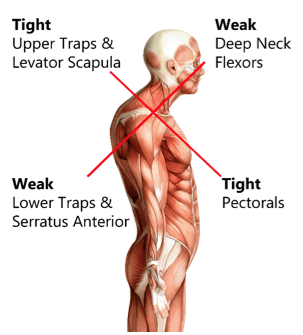
Upper cross syndrome refers to a muscular imbalance pattern involving the neck, shoulders, chest, and upper back.
The "cross" refers to the pattern created between:
Tight, overactive muscles
Weak, underactive muscles
When viewed from the side, these muscle groups create a crisscross pattern through the upper body.
The "Tight" Side of the Cross
These muscles often become shortened or overactive:
Pectoralis Major and Minor (Chest Muscles)
When your shoulders sit forward for extended periods, the muscles across your chest can become shortened, pulling your shoulders into a rounded position.
Upper Trapezius and Levator Scapulae (Neck and Shoulder Muscles)
These muscles help elevate and stabilize your shoulder blades but can become overworked when your posture requires them to constantly support your head and shoulders.
Suboccipital Muscles (Base of the Skull)
These small muscles can become tense when your head sits forward of your shoulders.
The "Weak" Side of the Cross
These muscles often need more activation and endurance:
Deep Neck Flexors
These muscles help support your head and maintain a more balanced neck position.
Middle and Lower Trapezius
These muscles help control your shoulder blades and support healthy shoulder movement.
Rhomboids
These muscles assist with pulling the shoulder blades back and maintaining upper back stability.
Serratus Anterior
This important shoulder blade muscle helps your shoulder move smoothly and stay connected to your rib cage.
Why Stretching Alone Usually Isn't Enough
A common mistake when addressing posture is only stretching what feels tight.
While stretching your chest, neck, and upper back can feel great, lasting change usually requires strengthening the muscles that are not doing enough work.
Think of it this way:
Stretching creates space.
Strength creates support.
A balanced approach includes:
✅ Stretching shortened tissues
✅ Improving thoracic spine mobility
✅ Strengthening the deep neck flexors
✅ Training the muscles that control the shoulder blades
✅ Building better movement habits throughout the day
10 Exercises to Improve Upper Cross Syndrome
Try this mobility and strengthening routine several times per week to help improve upper body mobility, posture, and shoulder blade control.
Watch the Full Exercise Routine
If you're more of a visual learner, I've put together a quick routine demonstrating all 10 stretches and strengthening exercises discussed below. Follow along, then refer back to the written instructions for reps, holds, and technique tips.
🎥 Watch: 10 Exercises for Upper Cross Syndrome (Instagram Reel)
1. Doorway Pec Stretch
Duration: Hold 30–45 seconds
Sets: 2 rounds
Targets:
Pectoralis major
Front of the shoulder
This stretch helps open the chest and reduce the forward pull on the shoulders.
2. Door Frame Pectoral Release
Duration: 30–60 seconds per side
Targets:
Pectoralis minor
Anterior shoulder tissues
The pec minor attaches to the shoulder blade and can contribute to rounded shoulder positioning when it becomes restricted.
3. Foam Roller Thoracic Extensions
Reps: 8–10 repetitions
Targets:
Thoracic spine mobility
Upper back stiffness
Improving mobility through the upper back allows the neck and shoulders to move more efficiently.
4. Thread the Needle
Reps: 8–10 per side
OR hold 30 seconds per side
Targets:
Thoracic rotation
Rhomboids
Posterior shoulder
This movement helps improve upper back rotation while stretching areas that often become stiff with prolonged sitting.
5. Child's Pose With Side Reach
Duration: Hold 30 seconds per side
Targets:
Latissimus dorsi
Side body tissues
Upper back
Tight lats can contribute to shoulder positioning and limited overhead movement.
6. Levator Scapulae Stretch
Duration: Hold 30 seconds per side
Targets:
Levator scapulae
Neck and shoulder tension
This is a great option for people who carry tension along the side of the neck or near the shoulder blade.
7. Upper Trapezius Stretch
Duration: Hold 30 seconds per side
Targets:
Upper trapezius
Side of the neck
This can help decrease tension in muscles that often become overactive with stress and prolonged desk work.
Strengthening Exercises
After improving mobility, reinforce those changes by strengthening the muscles that support better posture.
8. Chin Tucks
Reps: 10 repetitions
Hold: 5 seconds each
Strengthens:
Deep neck flexors
Chin tucks help train the muscles that support a more balanced head and neck position.
9. Band Pull-Aparts
Reps: 12–15 repetitions
Strengthens:
Rhomboids
Middle trapezius
Rear shoulder muscles
This exercise helps improve shoulder blade control and counteracts the forward shoulder position created by prolonged sitting.
10. Serratus Wall Slides
Reps: 10–12 repetitions
Strengthens:
Serratus anterior
Lower trapezius
These muscles help your shoulder blades move properly and provide stability during overhead movement.
Desk Posture Tips to Reduce Upper Back and Neck Tension
Your exercise routine matters, but your daily habits matter too. Here are a few simple ways to support better posture throughout your workday:
1. Bring Your Screen to Eye Level
Your monitor should be positioned so you can look straight ahead rather than constantly looking downward.
2. Keep Your Feet Supported
Your feet should rest comfortably on the floor, allowing your hips and pelvis to stay supported.
3. Avoid "Tech Neck"
Instead of dropping your head toward your phone, bring your phone closer to eye level.
4. Take Movement Breaks
The best posture is your next posture.
Try standing, walking, or changing positions every 30–60 minutes.
5. Avoid Forcing Perfect Posture
Posture is not about holding yourself rigid all day. Your body is designed to move.
The goal is not perfection—the goal is having the strength and mobility to move through different positions comfortably.
Final Thoughts
Upper cross syndrome is not simply a "bad posture" problem. It is a movement pattern influenced by your daily habits, muscle endurance, mobility, and environment.
The most effective approach combines:
Mobility work for tight tissues
Strengthening for underactive muscles
Ergonomic changes
Consistent movement throughout your day
If your neck, shoulders, or upper back constantly feel tight, your body may be asking for better movement—not just another stretch.
At Heirloom Health, we help patients identify the underlying factors contributing to discomfort and create personalized care plans to support better movement, function, and overall wellness.
🎥 Watch: 10 Exercises for Upper Cross Syndrome (Instagram Reel)
